Stablecoin Payout Platform: Judging Counterparty Risk
Key highlights
- A stablecoin payout platform that holds client funds becomes a counterparty. Who holds them, and on what terms, sets the risk.
- Registration is not endorsement. FINTRAC issues no licences to the businesses it registers.
- Segregation keeps client funds apart from a stablecoin payout platform's own money, which decides what a payer recovers if the platform fails.
- A CFO can price that exposure on four lines: funds at risk, capital released, review hours and corridor coverage.
A finance team that sends $500,000 to a stablecoin payout platform on Monday for Friday's supplier run has left $500,000 with that platform for four days. Funding each payout at the moment it is made shortens that window, but only the custody terms decide what happens to the money while it waits. Procurement weighs the rate and the fee. Custody gets one line in a vendor questionnaire.
This guide sets out where counterparty risk sits on a stablecoin payout platform, what a registration does and does not prove, and how a CFO prices the exposure.
A stablecoin payout platform is a service that takes a business's funds, moves their value on stablecoin rails and delivers local currency to recipients abroad.
Counterparty risk is the chance that a party holding or moving a payer's funds fails to deliver them, through insolvency, a frozen account or an operational breakdown.
Segregated custody means client funds sit in accounts or wallets held apart from the provider's own operating funds, so they can be identified and returned if the provider fails.
Where does counterparty risk sit on a stablecoin payout platform?
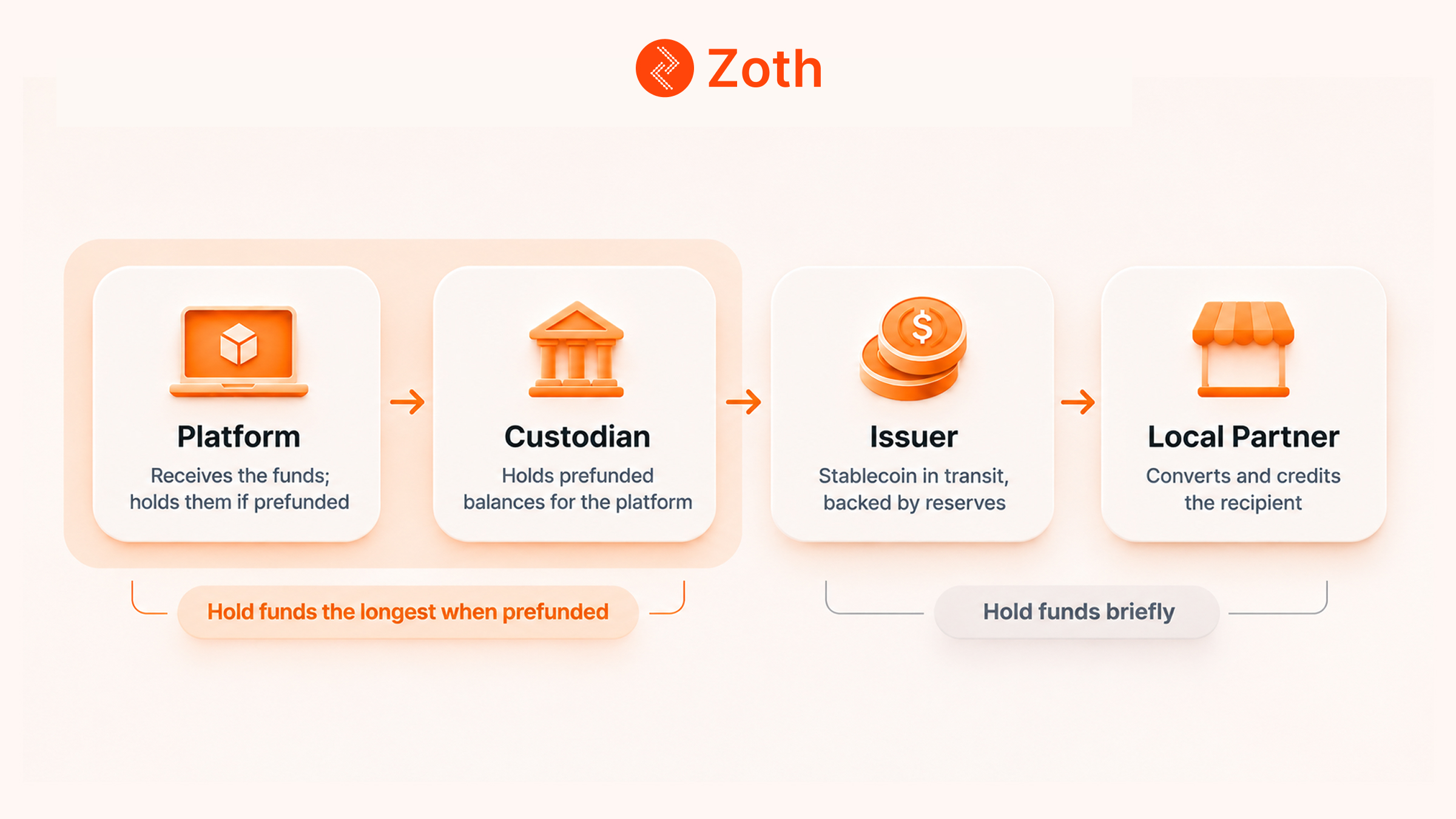
Four parties hold the value on one payout.
- The platform. It receives the payer's funds and, on a prefunded model, holds them until the payout executes.
- The custodian. A bank or digital asset custodian holds the funds for the platform.
- The issuer. While in transit, the value sits in a stablecoin, a claim on its issuer backed by reserves.
- The local partner. A licensed local institution converts the value and credits the recipient.
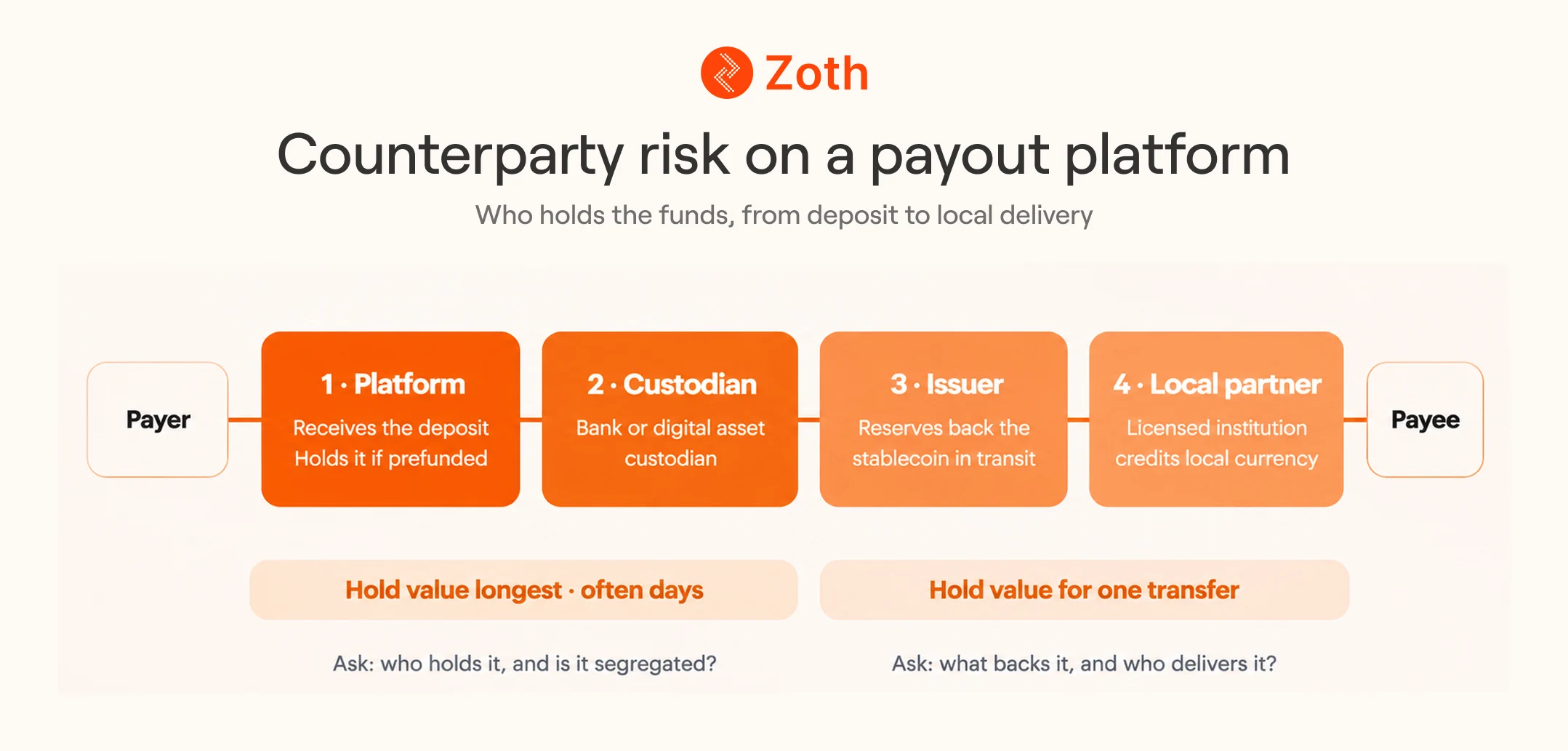
The platform and its custodian hold the value longest, often for days; the issuer and the local partner hold it for one transfer. Due diligence on a stablecoin payout platform should weight its questions the same way.
What does registration prove on a stablecoin payout platform?
A registration number answers one question: has the business met the legal requirement to register? It does not show solvency or how the business holds client money.
FINTRAC, Canada's financial intelligence unit, states on its MSB registry that it does not issue licences or certificates of registration. FinCEN says inclusion in its registrant search is not an endorsement by any government agency.
Registration places a provider inside an anti-money-laundering regime, covered in Zoth's guide to AML on payouts. Zoth's guide to stablecoin compliance covers the regulatory side. Protection of client funds usually sits under a separate regime, such as the EU's safeguarding rules for crypto-asset service providers, covered below.
A Head of Payments should therefore put two separate questions to a stablecoin payouts provider: which registrations it holds, and which rules govern how it holds client funds. Licensing in the destination country is a third question, covered in Zoth's guide to Global South providers.
Segregated custody on a stablecoin payout platform
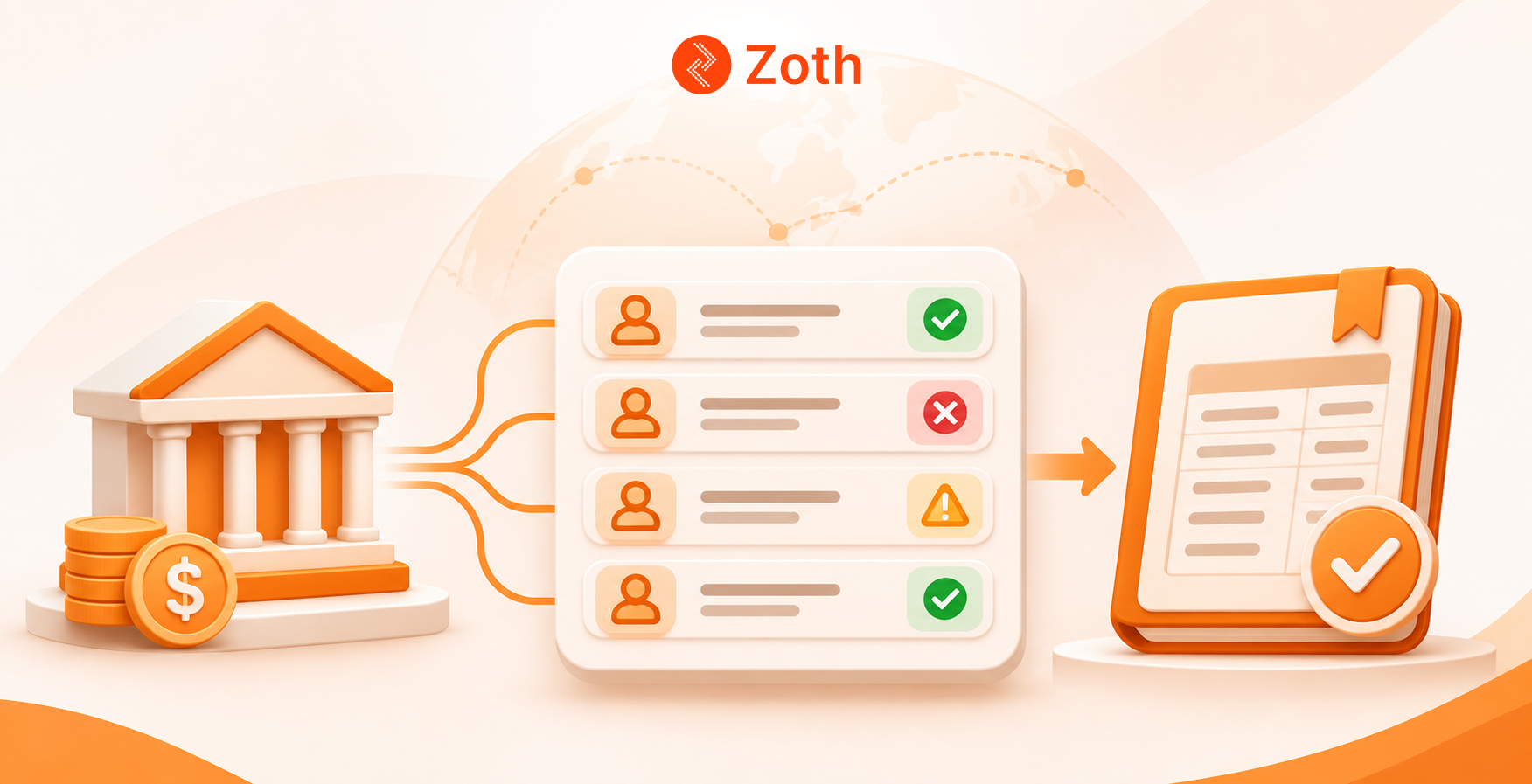
Segregation decides what a payer recovers if a provider fails. Where client funds are commingled with the provider's operating money, the payer may rank as an unsecured creditor. Where funds are segregated and the records show who owns what, the funds can be identified and returned.
In September 2024, the FDIC proposed rules requiring banks to keep owner-level records for pooled custodial accounts and reconcile them daily, so each customer's share can be identified if a bank fails. Article 70 of the EU's MiCA regulation requires crypto-asset service providers that hold client assets to safeguard clients' ownership rights, especially in insolvency, and to hold client funds in accounts separately identifiable from their own.
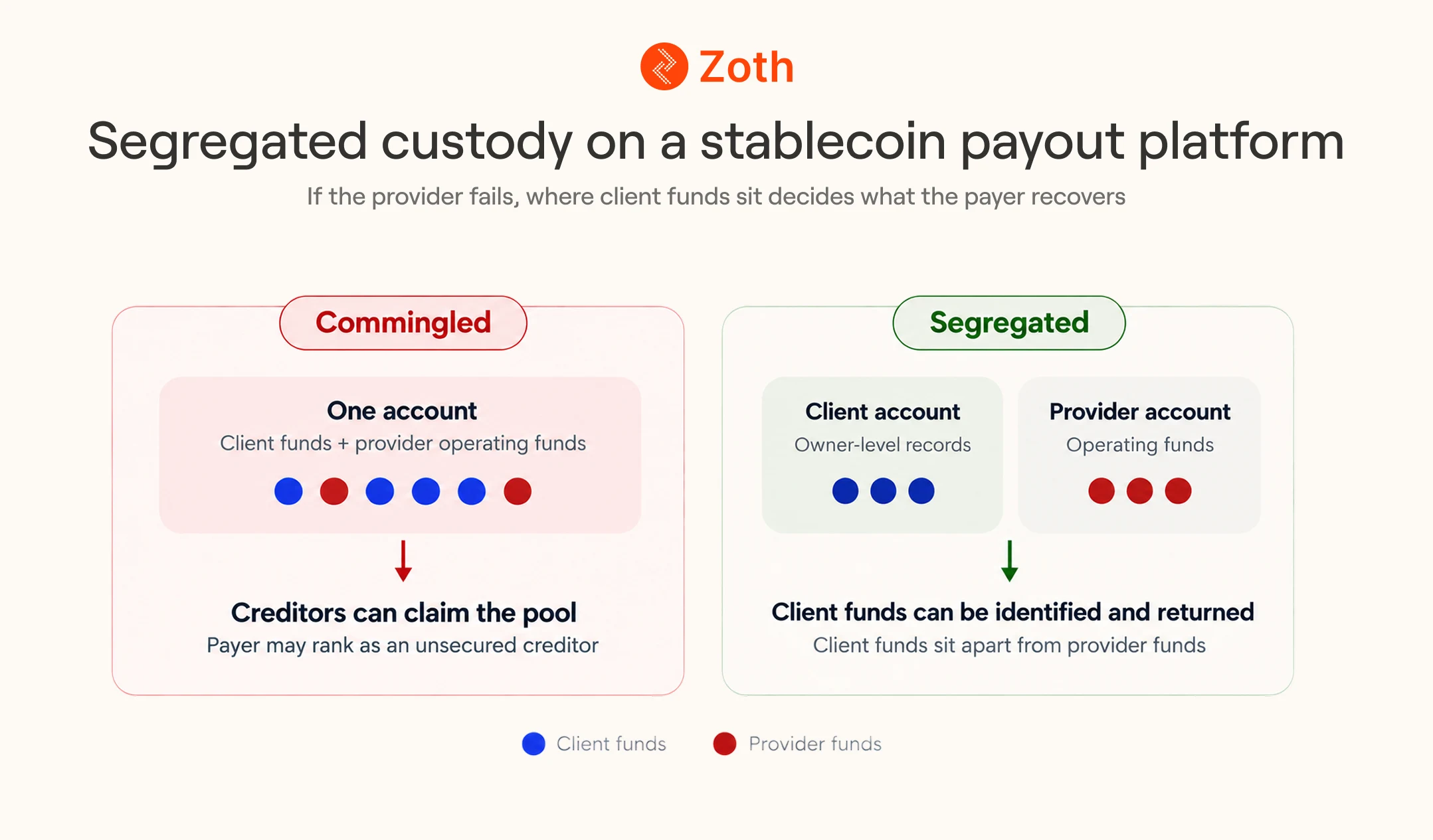
Three answers settle the custody question for any stablecoin payouts provider: who the custodian is, whether client funds sit apart from the platform's own, and whether the records identify each client's balance.
What backs the stablecoin while a payout is in transit?
During transfer, the payout's value sits in a stablecoin, a claim on its issuer rather than on a bank. That exposure is short-lived on a stablecoin payout platform, but the issuer is still a counterparty.
The US GENIUS Act requires permitted issuers to back payment stablecoins on at least a one-to-one basis with high-quality liquid assets and to publish their reserve composition every month, once its requirements take effect. A stablecoin payouts provider should name the stablecoins it settles in, so a finance team can read the issuer's reserve reports.
Five checks before choosing a stablecoin payout platform
- Registration status. Confirm the name, number and status in the regulator's public registry.
- Contracting entity. Confirm which legal entity signs the agreement and receives the funds. That entity decides which regulator oversees the relationship.
- Custody structure. Ask who holds client funds between deposit and payout, and whether they are segregated.
- Settlement assets. Ask which stablecoins the provider uses and where their issuers publish reserve reports.
- Delivery partners. Ask which licensed institution credits the recipient in each corridor.
A stablecoin payouts provider that answers all five in writing gives the risk committee a file it can test.
How a CFO values counterparty risk on a stablecoin payout platform
Counterparty risk rarely appears as a cost line. Four lines make it visible.
| ROI line | How the CFO measures it | What Zoth Payments Limited changes |
| Funds at risk | Average balance held with the provider on a given day | Each payout funded from the client's own wallet; no client balance held |
| Capital released | Balances prefunded at destination partners × cost of capital | Per-payout stablecoin funding in place of standing balances abroad |
| Review hours saved | Hours per provider review × reviews a year × hourly cost | Registration status verifiable in FINTRAC's public registry |
| Corridor coverage | Corridors with a licensed delivery partner ÷ corridors paid | Payouts settle through regulated payout partners in each corridor |
Annual return = capital released + review hours saved. Funds at risk and corridor coverage show how much exposure that return carries.
A payer that prefunds $2,000,000 across destination partners at an 8% cost of capital carries $160,000 a year in funding cost. The funds-at-risk line shows how much value sits with one counterparty on an average day, and so how much diligence that stablecoin payout platform warrants.
How zPayments answers the counterparty question
Zoth Payments Limited runs zPayments for business payouts and is registered with FINTRAC as a money services business under number C10001622, a status any finance team can confirm in the public registry. Value moves on stablecoin rails and lands in local currency through regulated payout partners in each corridor. Businesses fund each payout from their own wallet, and Zoth holds no client balance. Every payment is screened, and sender and recipient details travel with each transfer.
Running payouts into emerging markets? Review where your payout funds sit with an international payment specialist at zPayments.
Frequently asked questions
What is a stablecoin payout platform?
A service that moves a business's funds on stablecoin rails and pays recipients abroad in local currency.
Is FINTRAC registration a licence?
No. FINTRAC does not issue licences or certificates. Registration confirms that a business has met the legal requirement to register.
What does segregated custody protect against?
Provider insolvency. Segregated client funds on a stablecoin payout platform sit apart from the platform's own money, so they can be identified and returned if the platform fails.
What should a Head of Payments ask a stablecoin payouts provider?
Its registrations, its contracting entity, who holds client funds before payout, its settlement stablecoins and its licensed partner in each corridor.
How do businesses evaluate a stablecoin payout provider for counterparty risk?
On five checks: registration status in the regulator’s public registry, the contracting entity, who holds funds before payout, which stablecoins settle the payout, and which licensed partner credits the recipient in each corridor.