Instant Settlement for Emerging Market Payouts
Key highlights
- Instant settlement takes the cross-border leg of emerging market payouts off the banking calendar, so weekends and holidays no longer hold it.
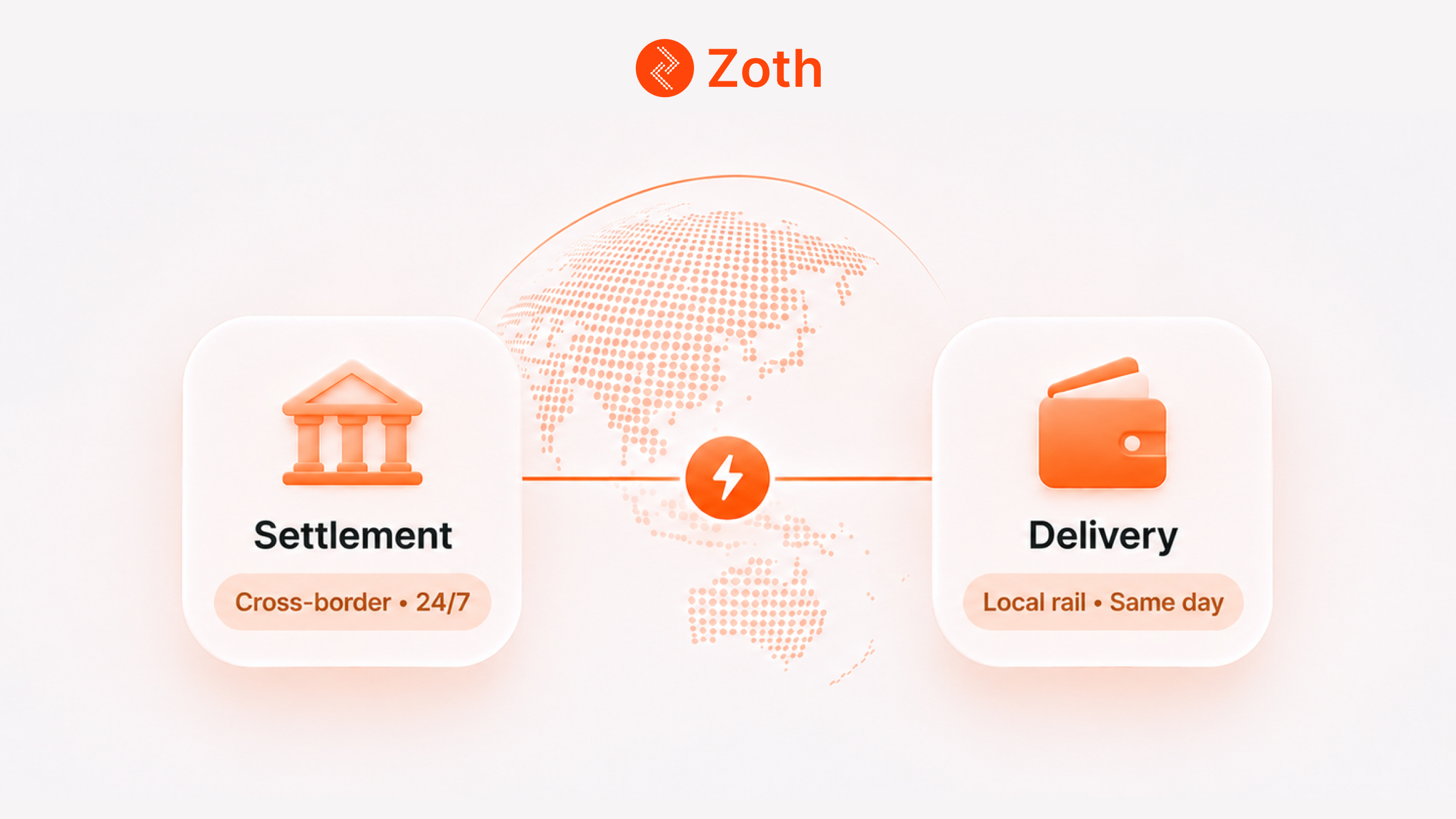
- Settlement and delivery are separate events. The destination rail decides when the recipient can use the funds.
- Fast payments averaged 49% of cashless payments across the emerging market members of the Committee on Payments and Market Infrastructures (CPMI) in 2024, up from 43% a year earlier.
- Rail hours, beneficiary details, compliance review and local liquidity decide where speed stops.
- A two-line ROI framework values faster emerging market payouts per corridor.
A payout team in Toronto releases a contractor run on a Canadian bank holiday. The contractors in Mumbai are paid through India's Unified Payments Interface (UPI), which runs around the clock. The correspondent route between the two runs on banking hours, so the payout waits for the next business day.
A 24/7 settlement leg takes that part of emerging market payouts off banking hours. Paired with a real-time local rail, it lets a payout land the same day.
Emerging market payouts are payments a business sends to suppliers, contractors, sellers and staff in emerging and developing economies, credited in local currency.
Instant settlement is the transfer of value from the payer's provider to the local payout partner as soon as the payment is released, at any hour, with no cut-off or business-day wait.
Same-day delivery is the credit of local currency to the recipient's bank account or wallet on the day the payout is released.
What does instant settlement mean for emerging market payouts?
The term covers the cross-border leg. Value moves from the payer's provider to the local payout partner without waiting for a correspondent bank to open. The CPMI defined fast payments in 2016: funds available to the payee immediately, on a 24/7 basis.
Settlement is not delivery
A payout runs on two clocks. Settlement ends when the payout partner holds the value. Delivery ends when the recipient's bank or wallet credits local currency. The stablecoin payout guide breaks down each step between them.
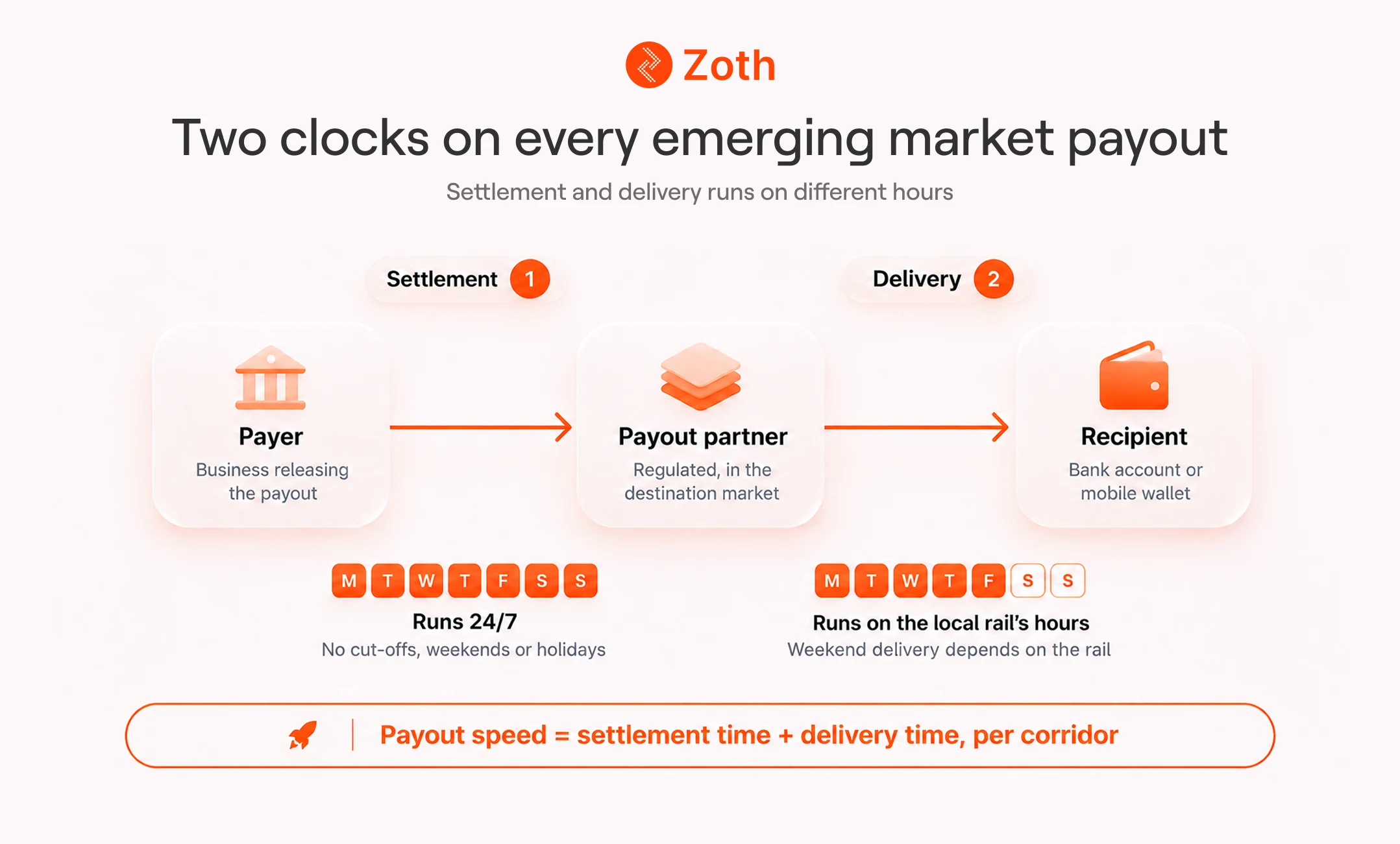
A head of payments is judged on the second clock, so any speed claim on emerging market payouts needs both figures.
Why the cross-border leg holds the payout
In correspondent banking, the cross-border leg inherits the cut-offs, weekends and holidays of each bank in the chain. The payout delays guide traces where those days come from. A 24/7 settlement leg removes the middle of the payment from the banking calendar. It does not change the calendar at either end.
Why emerging market payouts suit 24/7 rails
The last mile in many emerging markets already runs in real time. More than 100 jurisdictions have implemented fast payment systems, according to a 2024 paper from the Bank for International Settlements. Across the CPMI's emerging market members, fast payments averaged 49% of cashless payments in 2024, up from 43% a year earlier.
India's UPI and the UAE's Aani platform both process transfers 24/7. Where the receiving rail never closes, a correspondent route that stops at weekends keeps the payout on banking hours.
Project Nexus sets out how to link domestic instant payment systems so a cross-border payment arrives within 60 seconds in most cases. It reaches only the countries that join it. A stablecoin settlement leg needs no link between two central banks. It needs a regulated payout partner in the destination market.
Where speed stops on emerging market payouts
Four factors decide when the recipient is paid.
- Local rail hours. Some destination rails settle in batches or pause outside business hours. The payout lands at the next run or when the rail reopens.
- Beneficiary details. An incorrect account or wallet number causes the payout to fail. Validating details before release removes the most common cause.
- Compliance review. Every payout is screened before release. A payout that raises a compliance question does not proceed until review clears it.
- Local liquidity. The payout partner needs local currency on hand at the moment of payout. Local liquidity sets the price and the timing.
How to test a provider's speed claim
Five questions separate a corridor-level answer from a marketing average.
- Does the cross-border leg run on weekends and public holidays, including approvals?
- What share of last month's payouts in each corridor reached the recipient on the day of release?
- Which destination rails clear in batches, and when is each day's last run?
- What happens to a payout released after that last run?
- Does the payout status show the step at which a delayed payout stopped?
An ROI framework for emerging market payouts
The head of payments owns delivery time. The CFO owns the cash behind it. Two lines value a faster route for emerging market payouts, corridor by corridor.
| ROI line | How to measure it | What Zoth Payments Limited changes |
|---|---|---|
| Early release avoided | Value released early for weekend or holiday due dates × days early ÷ 365 × cost of capital | The cross-border leg runs on weekends and holidays, so payouts can be released on the due date |
| Late-payment penalties avoided | Payouts credited after a contractual due date a year × penalty or interest per late payout | Same-day local delivery on supported corridors, subject to the destination rail's operating hours and standard compliance checks |
Annual value per corridor = early release avoided + late-payment penalties avoided
In an illustrative case, a platform paying $3m a month to contractors in one corridor releases a quarter of that value two days early for weekend and holiday pay dates. At a 9% cost of capital, that costs about $4,400 a year. Forty payouts a year credited after their contractual due date, at a $250 penalty each, add $10,000.
How Zoth Payments Limited handles emerging market payouts
zPayments, from Zoth Payments Limited, takes emerging market payouts funded in USDC from the business’s own wallet and delivers them in local currency through regulated payout partners. The cross-border leg runs 24/7, with no cut-off windows or weekend pauses. A payout that needs a manual compliance check proceeds once that check clears. Local delivery is completed the same day on supported corridors, subject to the destination rail's operating hours and standard compliance checks. Supported currencies, settlement timelines and features vary by jurisdiction.
India is live, with payouts delivered over India's local rails, including UPI. Coverage for other markets is confirmed per corridor before volume is committed. Zoth Payments Limited is registered with FINTRAC as a money services business, registration number C10001622.
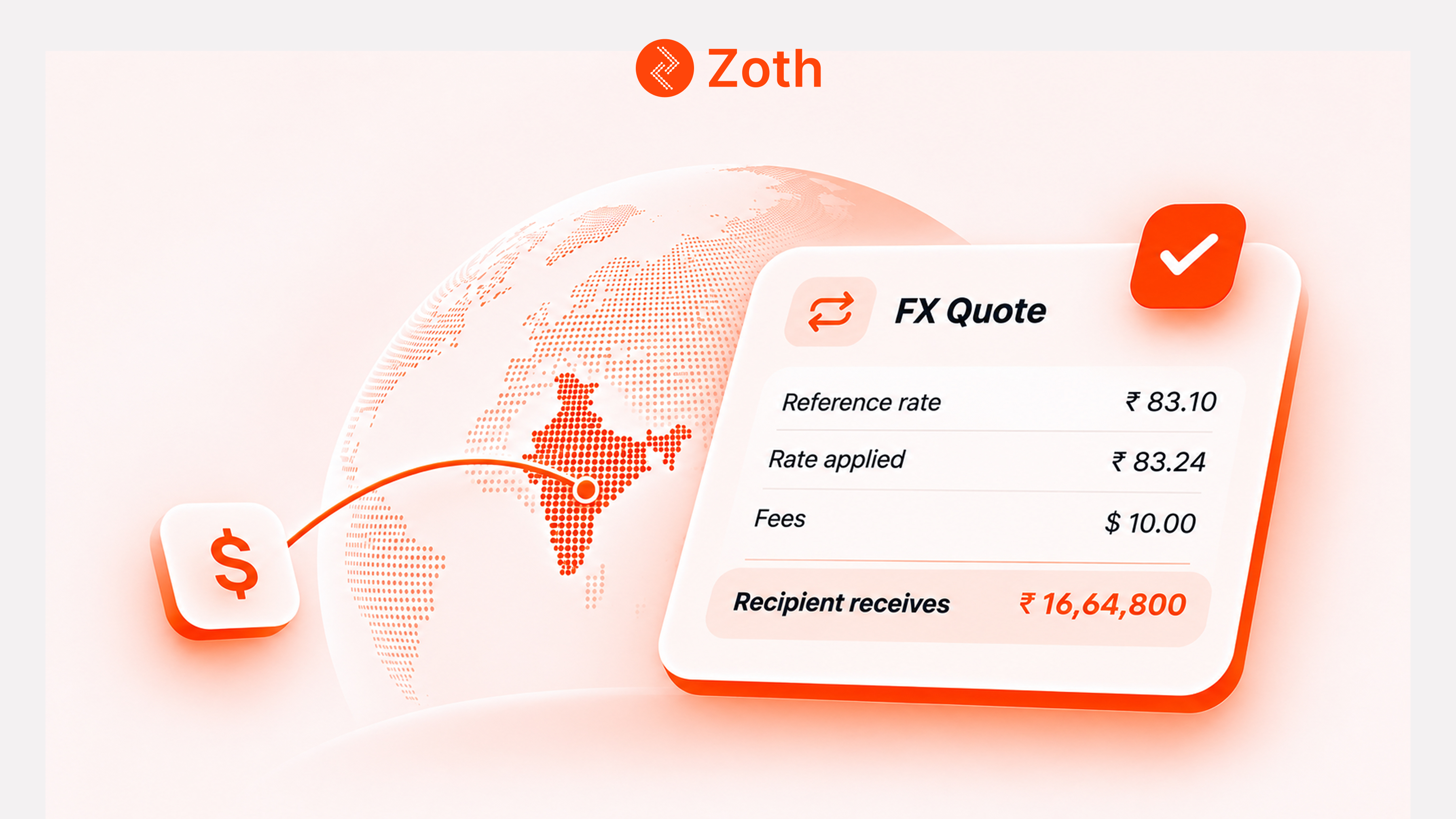
A faster route is worth taking only if the amount holds. The zFX calculator shows the live rate and an indicative local payout amount at that rate. Before the payout is confirmed, the review step shows the rate, with the Zoth FX fee built in, the local network commission and the final amount. A head of payments can check that figure against what the current route credited on recent emerging market payouts.
Running payouts across emerging markets? Compare your current payout times and fees with a quote from the Zoth Payments Limited team.
Regulatory Disclosures & Mandatory Risk Notices
Disclaimer: This article is provided for informational and educational purposes only and does not constitute financial, legal, tax or investment advice.
Service Availability & Compliance: Zoth Payments Limited is registered with FINTRAC as a money services business. Local-currency payouts are delivered through regulated payout partners, subject to applicable local laws. All transactions remain subject to identity verification (KYC/KYB), anti-money laundering (AML) monitoring, sanctions screening and the FATF Travel Rule. Submission of a payout does not guarantee its execution or timing, and exchange rates, payout amounts, fees and settlement times may vary.
Digital Asset Risk Notice: Stablecoins and digital assets carry inherent risks, including market volatility, potential de-pegging, smart contract vulnerabilities, liquidity limitations and changing regulatory frameworks. Digital assets are not legal tender in most jurisdictions and may not be backed by government deposit insurance (e.g., FDIC, CDIC).
Frequently asked questions
What are emerging market payouts?
Payments a business sends to suppliers, contractors, sellers or staff in emerging and developing economies, credited in local currency to a bank account or mobile wallet.
What is instant settlement in cross-border payments?
The transfer of value from the payer's provider to the local payout partner as soon as a payment is released, at any hour, without a cut-off or business-day wait.
Does instant settlement mean the recipient is paid instantly?
Not always. Settlement ends with the payout partner. Delivery depends on the destination rail, the beneficiary details and the compliance review.
Can emerging market payouts move at weekends?
Yes, where the cross-border leg runs 24/7, the destination rail is open and no manual compliance check is pending. India's UPI, for example, operates around the clock.
How should a CFO measure the return on faster emerging market payouts?
Per corridor, on two lines: early release avoided and late-payment penalties avoided.