What Is Correspondent Banking, and What Replaces It?
Key highlights
- Correspondent banking carries cross-border bank payments through accounts banks hold with each other.
- From 2011 to 2022, active correspondents fell 47.1% in the Americas outside North America, 34.2% in Africa and 29.9% in Asia.
- India's message volume rose 90% over the same period while its foreign counterparties fell 25.3%.
- Correspondent bank fees recover each bank's account, compliance and liquidity costs, often from the payment itself.
- Four routes now replace parts of correspondent banking; only some are live for business payouts.
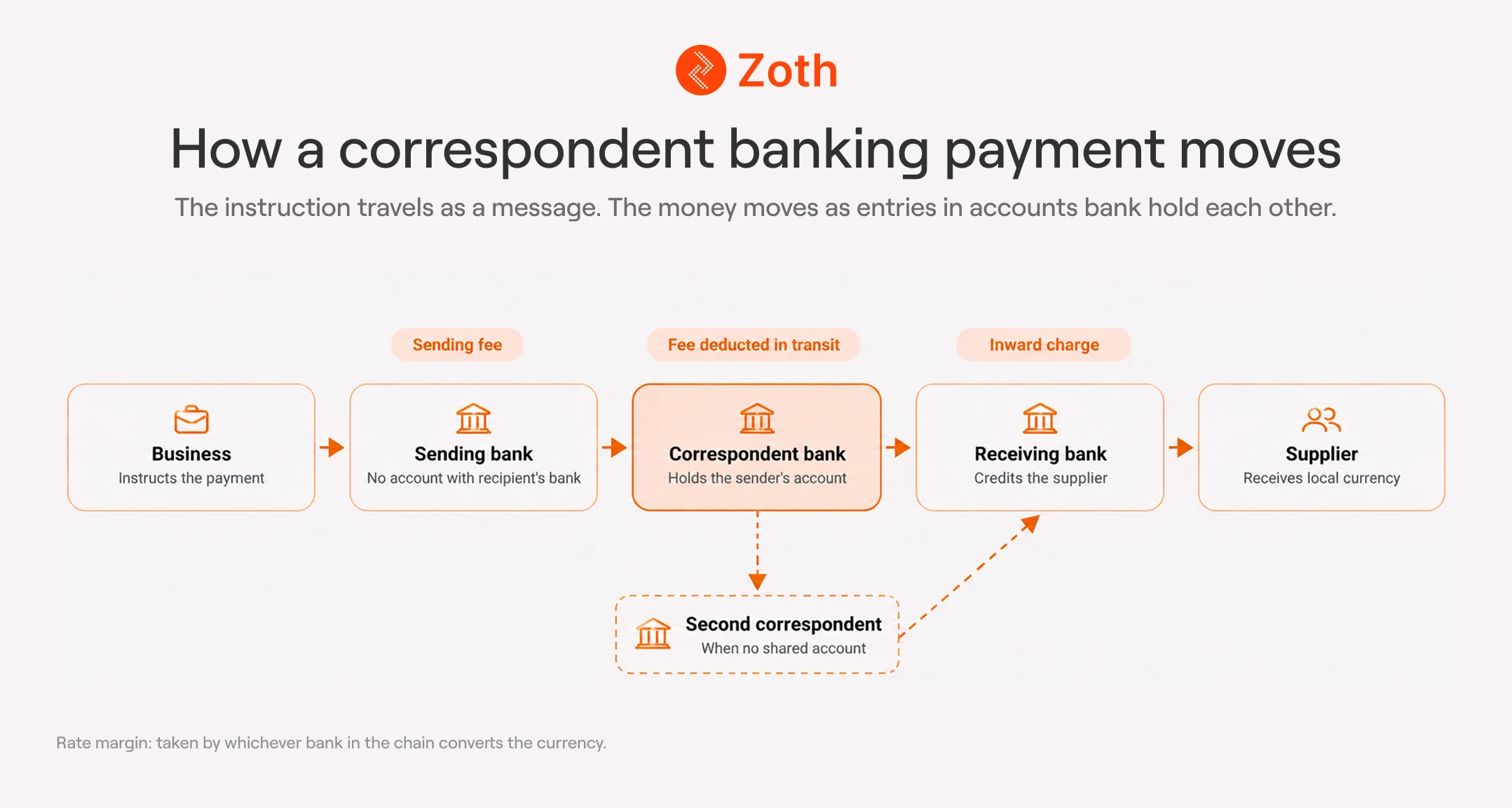
A business in Toronto pays a supplier in Manila. The two banks hold no account with each other, so a third bank carries the payment between them. For a head of payments, that network decides the route, the cost and whether a corridor stays open at all.
Correspondent banking is an arrangement in which one bank, the correspondent, holds deposits owned by other banks and provides payment services to them, as defined by the Committee on Payments and Market Infrastructures (CPMI).
A respondent bank holds an account with a correspondent and uses it to send and receive payments in that currency.
Correspondent bank fees are the charges each bank in the chain takes for carrying a payment, billed to the sender or deducted in transit.
How does correspondent banking work?
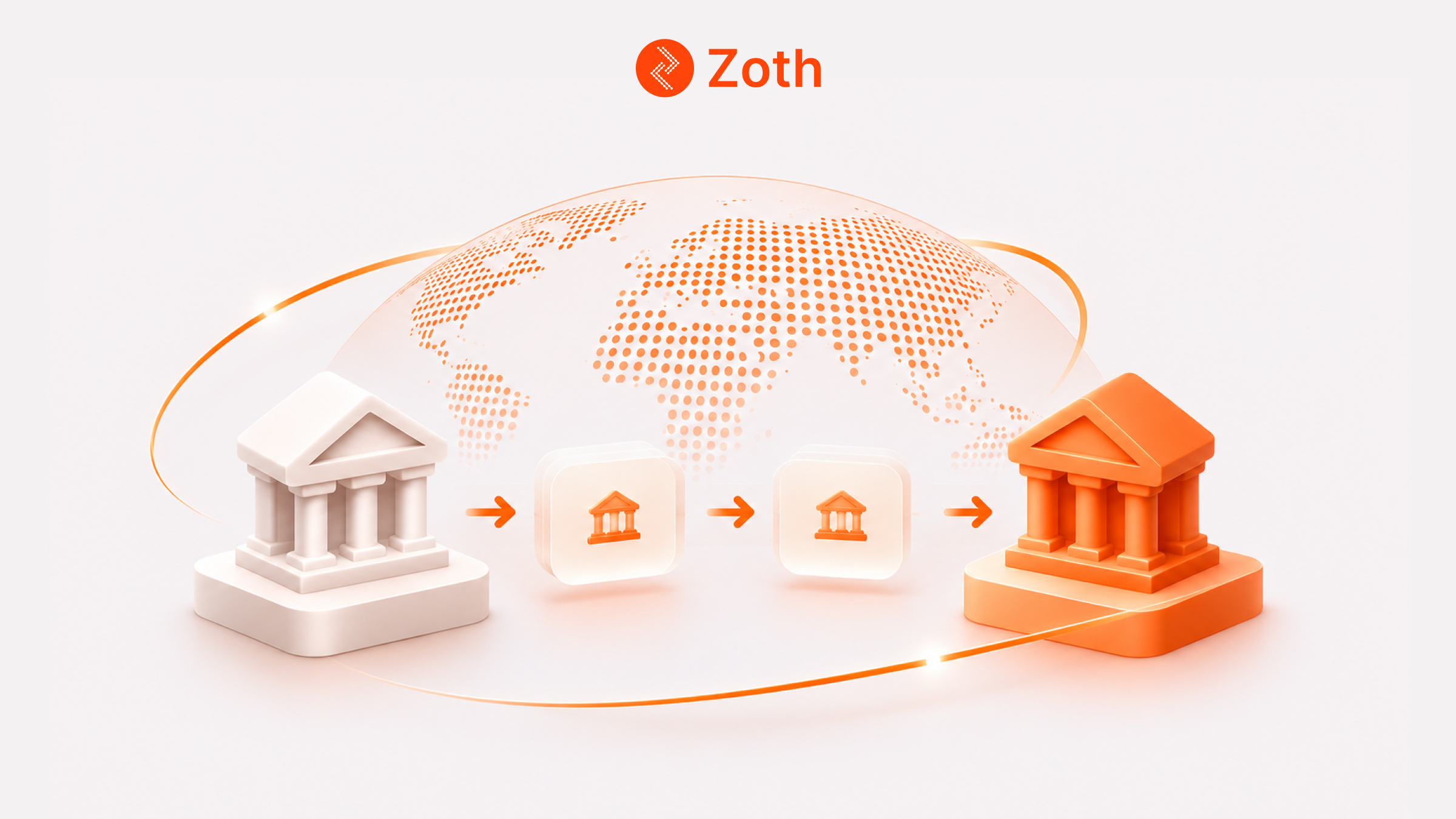
No bank holds an account with every other bank. Instead, a bank opens an account in each currency it needs with a bank that can settle that currency, then pays by messaging the correspondent to debit or credit that account. The owner calls the balance its nostro; the holder calls it a vostro.
Smaller banks often reach a correspondent indirectly, through a respondent that holds the account. The CPMI calls this nested correspondent banking.
Where the sender's and recipient's banks share no correspondent, the payment travels along a chain until it reaches one that does. Where the time goes on that route is covered in payment delays.
Why the correspondent banking network is shrinking
Correspondent banking carries growing volume through fewer banks. The CPMI's final annual review tracks active correspondents from 2011 to 2022.
| Region | Change in active correspondents, 2011 to 2022 |
|---|---|
| Americas, excluding North America | −47.1% |
| Oceania | −37.8% |
| Africa | −34.2% |
| Asia | −29.9% |
| North America | −19.4% |
India's message volume rose 90% as its counterparties abroad fell 25.3%.
The CPMI gives the reason. Correspondents drop respondents whose volume does not cover compliance costs, whose jurisdictions look too risky, or whose customer information is incomplete. The Financial Action Task Force (FATF), in its 2016 guidance, calls this de-risking and warns it can push payments into less transparent channels.
For a head of payments, a shrinking correspondent banking network means longer chains, fewer routes and the risk that a corridor's last correspondent withdraws.
What correspondent bank fees pay for
Each bank in the chain keeps an account for the respondent, runs due diligence on it and holds liquidity in the currency. The CPMI found compliance costs rising in a business already run on low margins. Correspondent bank fees carry that cost to the payment in two forms:
- A handling charge deducted from the principal by each correspondent on the route.
- A margin inside the rate wherever a bank in the chain converts the currency.
Each correspondent sets its own correspondent bank fees, and the sender cannot see the full chain when the payment leaves. Cost per hop and charge codes are covered in intermediary bank fees.
What replaces correspondent banking?
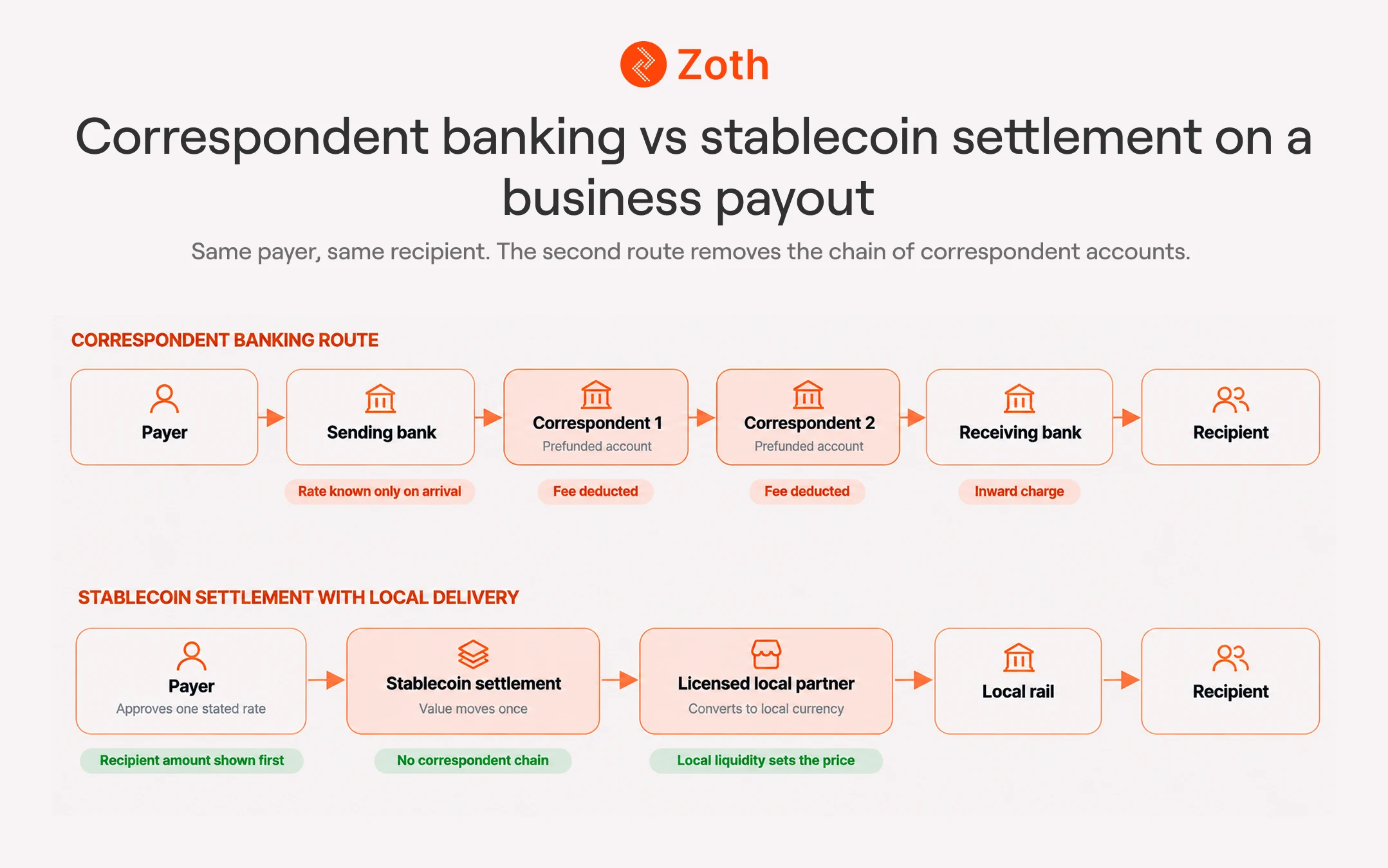
No single system replaces correspondent banking. Each alternative takes over one job.
| Route | What it replaces | What it still depends on | Status in 2026 |
|---|---|---|---|
| Local account networks | The cross-border hop | Prefunded balances in every destination | Live through payment platforms |
| Linked instant payment systems | The chain between two domestic fast payment systems | Each country joining the network | Preparing live implementation |
| Tokenised bank deposits | Settlement between banks | Banks accepting the same token | Mostly pilots, wholesale and intra-group |
| Stablecoin settlement with local delivery | The chain of correspondent accounts | A regulated payout partner holding local currency | Live for business payouts |
Linked instant payment systems
Instant payment systems already settle domestically in more than 70 countries. Project Nexus, started by the Bank for International Settlements (BIS), is built to link them through one platform. In 2025 six central banks, India and the Philippines among them, set up Nexus Global Payments to take it live. It reaches only countries that join.
Tokenised bank deposits
The Reserve Bank of Australia's Project Acacia, reported in May 2026, tested 20 wholesale use cases settled in central bank money, tokenised bank deposits and stablecoins. For a business payout, the sender's and recipient's banks must both accept the same token, so reach stops where that network ends.
Stablecoin settlement with local delivery
A stablecoin carries value between countries in place of the correspondent chain. A regulated payout partner in the destination pays the recipient in local currency through the local rail, from its own local float. Standard Chartered's Global Head of Payments described this pattern at Sibos 2026 as a stablecoin sandwich: stablecoin for the cross-border leg, local currency at delivery. The hops disappear, and local liquidity sets the price.
How to measure what the correspondent chain costs
- Pull three recent payments per corridor, with amounts sent and received.
- Mark the short-paid ones. Any gap is a deduction or a rate margin.
- Ask the bank for the route. Request the correspondents and charge code used.
- Price the same payment today. Run it through the zFX calculator below and compare.
An ROI framework for leaving correspondent banking
The head of payments owns the route; the CFO owns its cost. Three lines value the move per corridor.
| ROI line | How to measure it | What Zoth Payments Limited changes |
|---|---|---|
| Deductions removed | Short-paid payouts a month × average shortfall × 12 | No correspondent chain between payer and recipient |
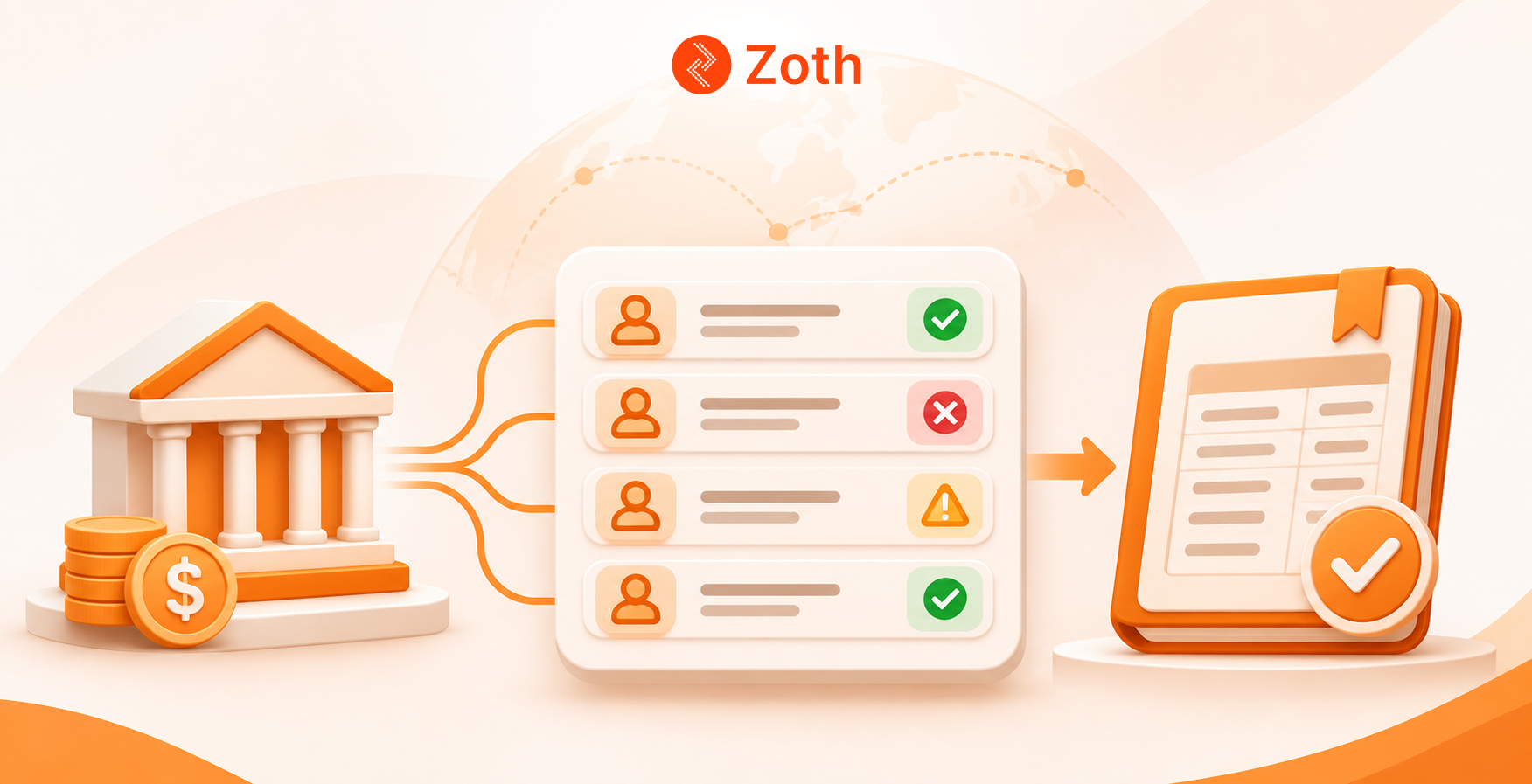
| Exceptions avoided | Traces and repairs a month × hours per case × hourly cost × 12 | Every payout tracked, records exportable |
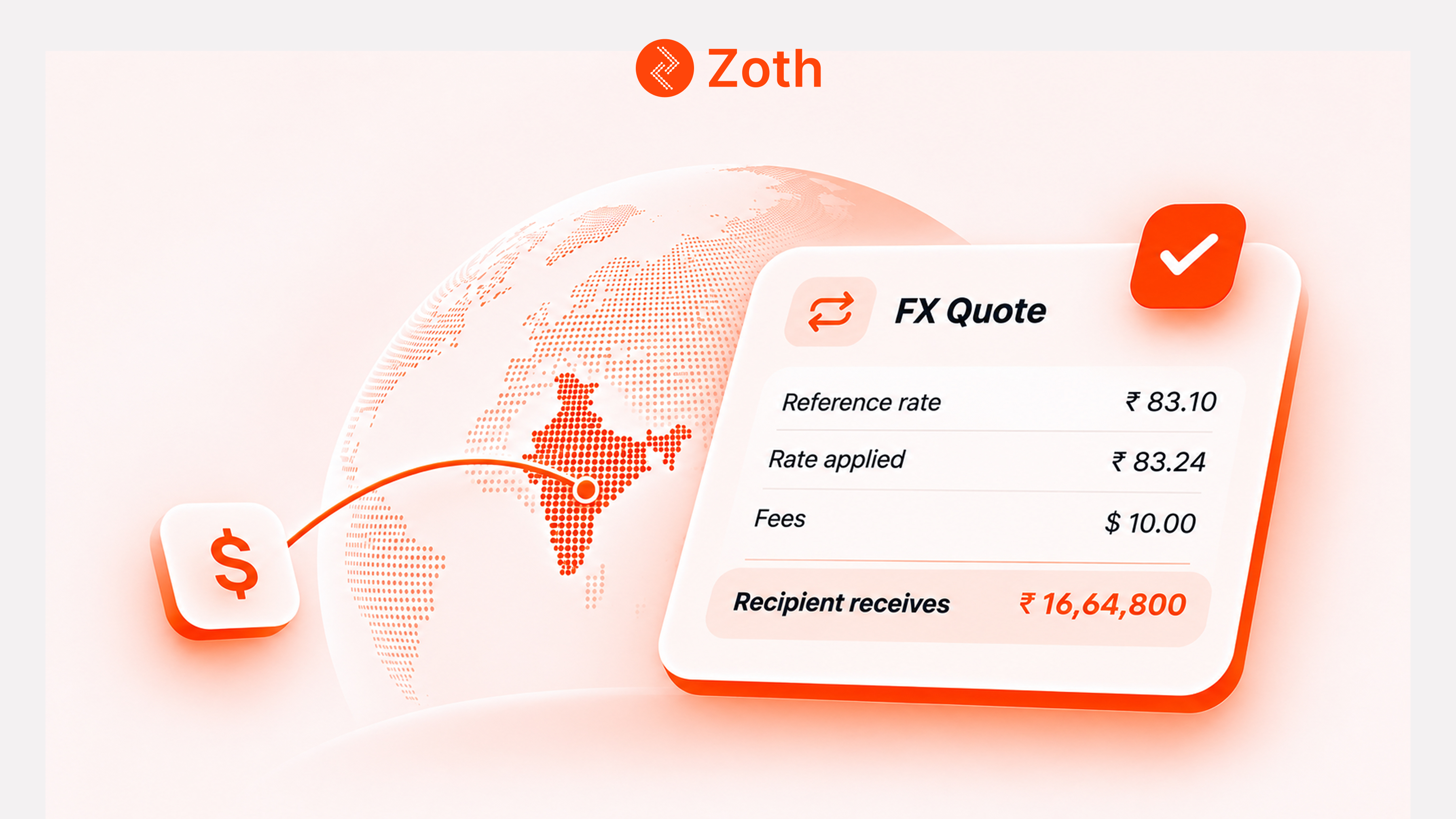
| Rate captured | (Quoted recipient amount − amount last received) ÷ amount last received × annual corridor volume | One stated rate, shown with the recipient amount before approval |
Annual return per corridor = deductions removed + exceptions avoided + rate captured
In an illustrative case, 40 short-paid payouts a month at a $35 average shortfall cost $16,800 a year. Twenty-five traces a month, at 2.5 hours each and $55 an hour, add $41,250.
How Zoth Payments Limited replaces the correspondent banking chain
zPayments, from Zoth Payments Limited, moves value on stablecoin rails and delivers local currency through regulated payout partners in each supported corridor. Each payout carries one stated rate, shown with the recipient amount before approval, and is tracked to delivery. Zoth Payments Limited is registered with FINTRAC as a money services business (C10001622). Supported currencies, timelines and features vary by jurisdiction.
The third line needs one number: what the recipient would receive today. zFX is Zoth's live rate calculator. Enter a corridor and an amount, and it shows the live rate and an indicative amount the recipient receives at that rate. The gap against the last bank payment is the rate line for that corridor.
Running payouts across emerging markets? Audit your cross-border payout fees with zPayments today.
Regulatory Disclosures & Mandatory Risk Notices
Disclaimer: This article is provided for informational and educational purposes only and does not constitute financial, legal, tax or investment advice.
Service Availability & Compliance: Zoth Payments Limited is registered with FINTRAC as a money services business. Local-currency payouts are delivered through regulated payout partners, subject to applicable local laws. All transactions remain subject to identity verification (KYC/KYB), anti-money laundering (AML) monitoring, sanctions screening and the FATF Travel Rule.
Digital Asset Risk Notice: Stablecoins and digital assets carry inherent risks, including market volatility, potential de-pegging, smart contract vulnerabilities, liquidity limitations and changing regulatory frameworks. Digital assets are not legal tender in most jurisdictions and may not be backed by government deposit insurance (e.g., FDIC, CDIC).
Frequently asked questions
What is correspondent banking?
An arrangement in which one bank holds accounts for other banks and makes payments for them in a currency or country they cannot reach directly.
What is the difference between a correspondent bank and an intermediary bank?
A correspondent bank holds the account relationship. An intermediary bank is any bank between the sender's and recipient's banks on a given payment.
What are correspondent bank fees?
Charges each bank in the chain takes for carrying a payment, either deducted in transit or built into the exchange rate.
Can a business pay abroad without correspondent banking?
Yes, where a provider settles without the chain, such as stablecoin settlement with delivery through a regulated payout partner. A standard bank wire still uses correspondent accounts.