Pay Vendors in Local Currency from USDC
Key highlights
- To pay vendors in local currency from USDC, a business keeps one balance in USDC and converts only at the moment each invoice is paid.
- The vendor receives rupees or dirhams in a bank account or mobile wallet and never has to hold a stablecoin.
- In stablecoin vendor payments, the provider quotes the landed amount before approval, and a head of treasury values the route per corridor on four lines.
A company that collects revenue in USDC, or holds part of its treasury in it, still owes its vendors in the currency they bank in. A supplier in India invoices in rupees. A fulfilment partner in the UAE expects dirhams. The dollar balance is in the wrong form for every one of those payables.
This guide explains how to pay vendors in local currency from USDC, what a head of treasury checks before switching the route, and how a CFO measures the return.
To pay vendors in local currency from USDC means to fund a vendor payment from a USDC balance and deliver it to the vendor as local fiat through a domestic bank or mobile-wallet rail.
Stablecoin vendor payments are supplier invoices settled from a stablecoin balance, with the payee credited in local currency through a provider that has licensed partners in each destination.
Landed amount is the local-currency sum credited to the vendor's account after conversion and every fee.
What does it mean to pay vendors in local currency from USDC?
The funding asset and the payout currency are separate. The business holds one balance in USDC, and each payment leaves in the currency the vendor's bank accepts. Conversion happens once, at execution, at a rate quoted before approval.
That differs from sending USDC to a vendor's wallet. A wallet transfer leaves the vendor holding a stablecoin, finding an exchange, paying the off-ramp and reporting the receipt under local tax rules. Vendors in emerging markets rarely want that burden. A business that chooses to pay vendors in local currency from USDC gives the vendor an ordinary domestic credit with an invoice reference attached.
Why treasury teams hold USDC and still owe local currency
USDC enters a treasury through three doors: customers who pay in it, platform revenue settled in it, and dollar balances moved on-chain to reach markets where correspondent banking is slow. On 14 October 2026 the European Banking Authority classified USDC as the first significant e-money token under MiCA, giving the asset a documented supervisory status.
The payables do not move with it. The FSB's 2025 progress report measured business-to-business cross-border payments on a $20,000 transfer and found fewer than 45% credited within one business day. A treasury that holds dollars on-chain and then pays vendors through a correspondent chain gains nothing on the last leg.
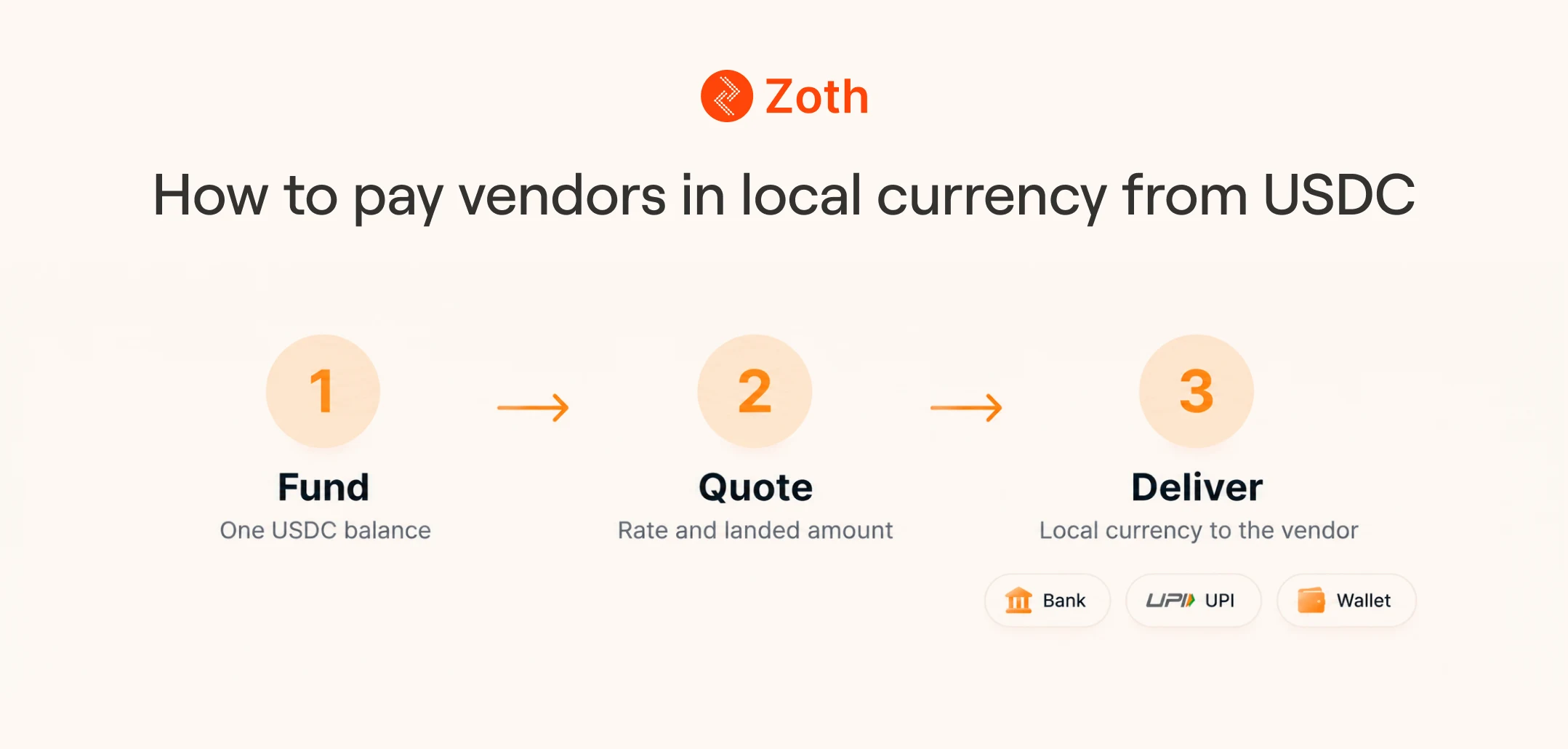
How to pay vendors in local currency from USDC
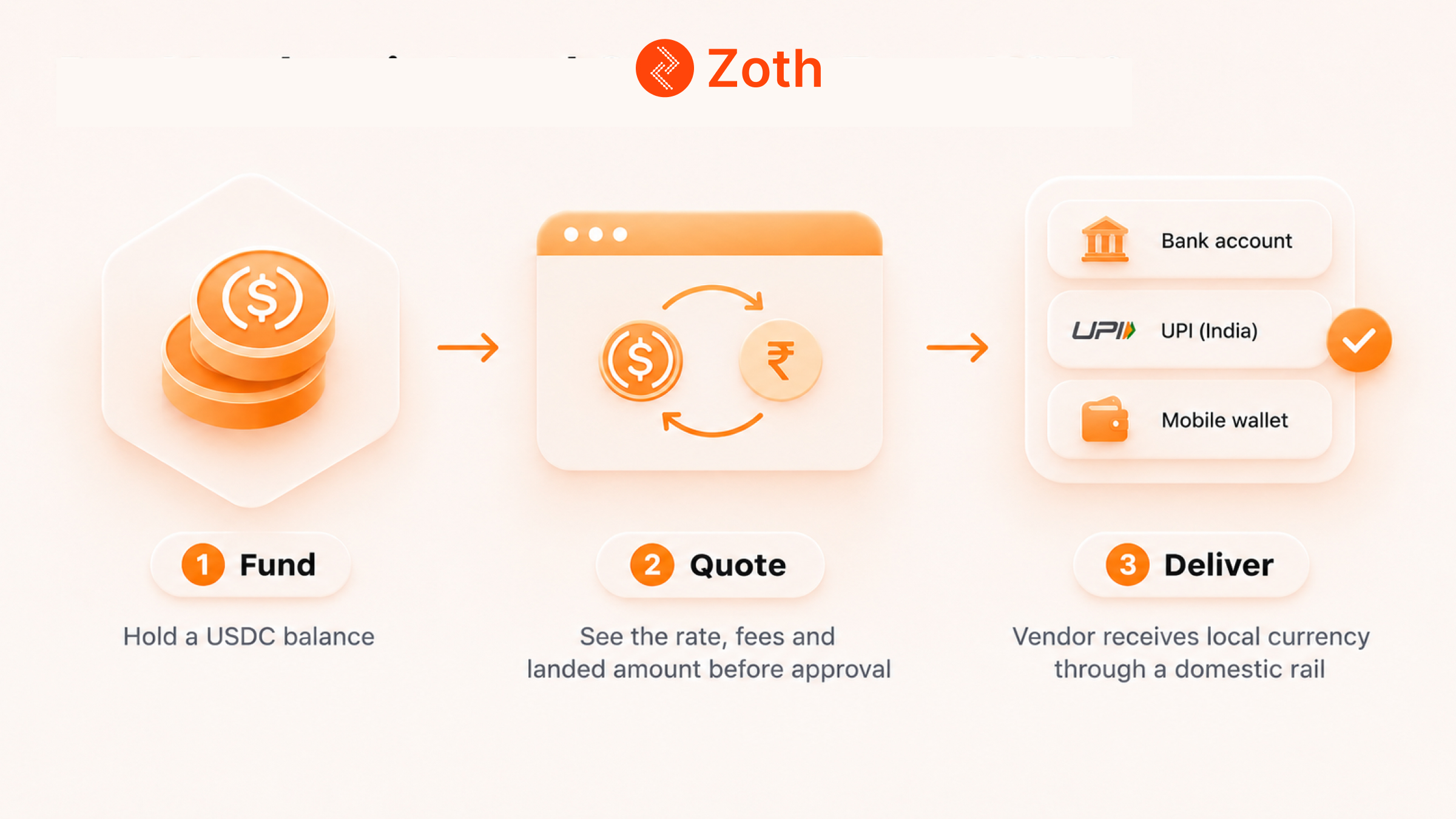
A treasurer sees three stages. Each has one number to check.
Fund: the USDC balance
A business that intends to pay vendors in local currency from USDC holds the balance in a wallet it controls, and funds each payout from that wallet when it is made. No local-currency balance sits in the destination country ahead of time. The BIS payments committee found in its 2023 report that fewer links in a payment chain are likely to reduce the funding tied up in prefunded accounts.
Quote: the rate and the landed amount
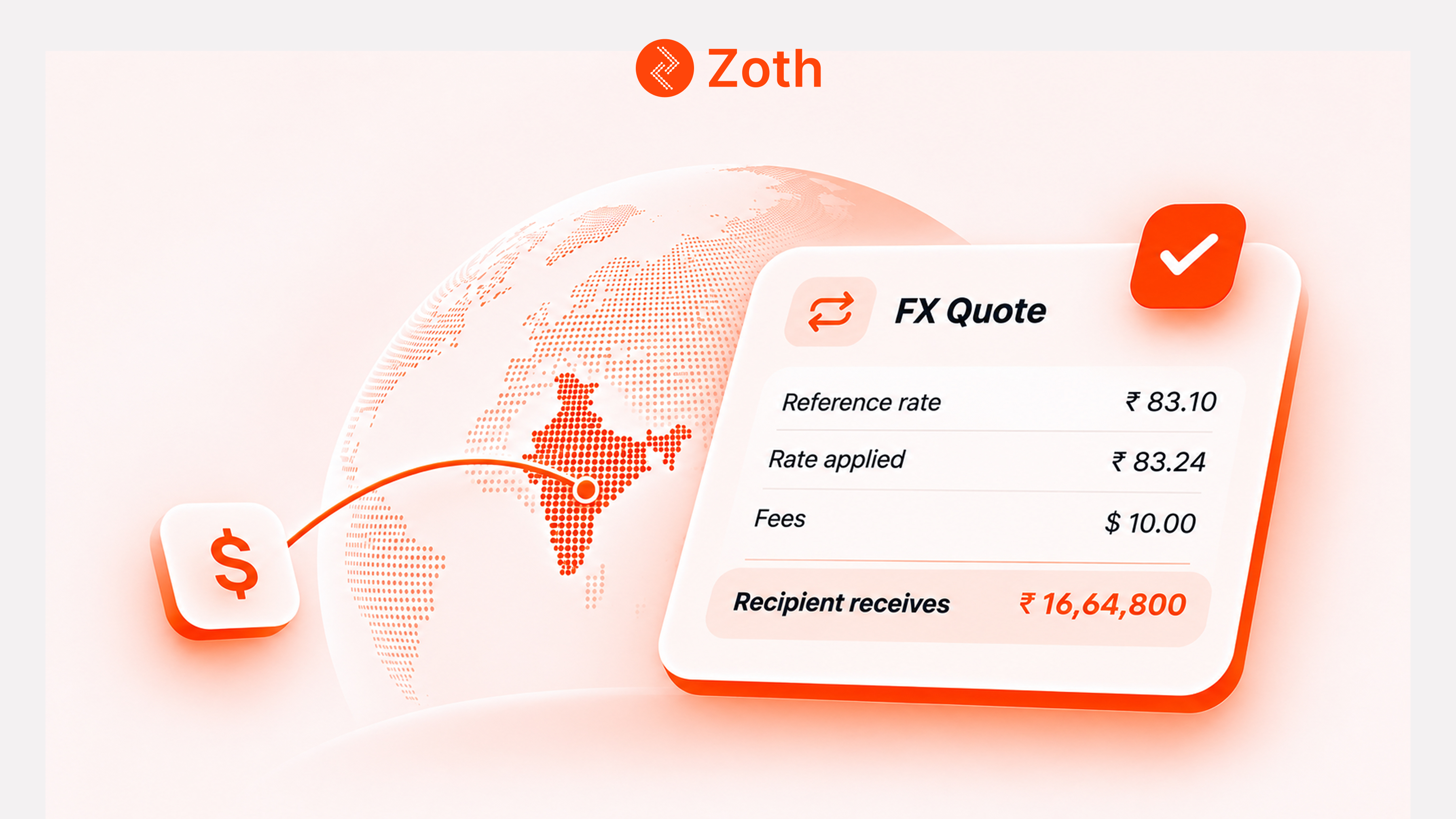
Before approval, the provider returns the conversion rate, the network fee and the exact local-currency amount the vendor will receive. Local liquidity sets the price: the depth of the provider's partner in each market decides the rate. For how the margin works, see FX spread.
Deliver: bank account or mobile wallet
The last stage to pay vendors in local currency from USDC is delivery. A licensed local partner converts the USDC and credits the vendor through the domestic rail. The endpoint matters. The World Bank's Q3 2025 report recorded that receiving into a mobile wallet cost 3.92% against 7.86% into a bank account on retail transfers. For small, recurring vendor invoices, wallet delivery can be the cheaper route where the vendor accepts it.
Three treasury checks to pay vendors in local currency from USDC
- Rate hold. How long does the quoted rate stand after approval? A quote that expires before the maker-checker cycle completes reprices the payment.
- Document trail. Does the vendor's bank issue the record its tax authority expects? A payment into India, for example, carries an RBI purpose code and lands through an Authorised Dealer bank, which is what makes a FIRC possible.
- Failure path. Where does the USDC sit if the local rail rejects the credit, and how quickly does it return to the funding balance?
A provider of stablecoin vendor payments should answer all three in writing before the first live payment. For the full provider check, see counterparty risk.
ROI framework: pay vendors in local currency from USDC
A head of treasury values the switch per corridor on four lines.
| ROI line | How treasury measures it | What changes |
|---|---|---|
| Local balances retired | Average local-currency float per corridor × cost of capital | Conversion at execution removes the standing balance |
| Conversion captured at execution | (Rate applied − mid-market rate) × annual corridor volume, before and after | One disclosed rate per payment |
| Payables cleared on time | Late-payment fees paid + early-payment discounts missed per year | Funding available every day of the week; delivery timing stated per corridor |
| Close effort | Hours matching payouts to invoices × loaded hourly cost | One ledger with an invoice reference on each payout |
Annual value per corridor = local balances retired + conversion captured at execution + payables cleared on time + close effort, less provider fees.
On a corridor paying $400,000 a month in vendor invoices, landing 0.5% more of each payment adds $24,000 a year.
Pricing the conversion with zFX
The second line needs one live number. zFX, the live payout calculator from Zoth Payments Limited, shows, for a chosen USDC amount sent into INR, AED or PKR, the conversion rate, the network fee and the sum credited. A treasurer can run last month's largest vendor invoice through it and compare the result with the amount the vendor confirmed.
How Zoth Payments Limited helps businesses pay vendors in local currency
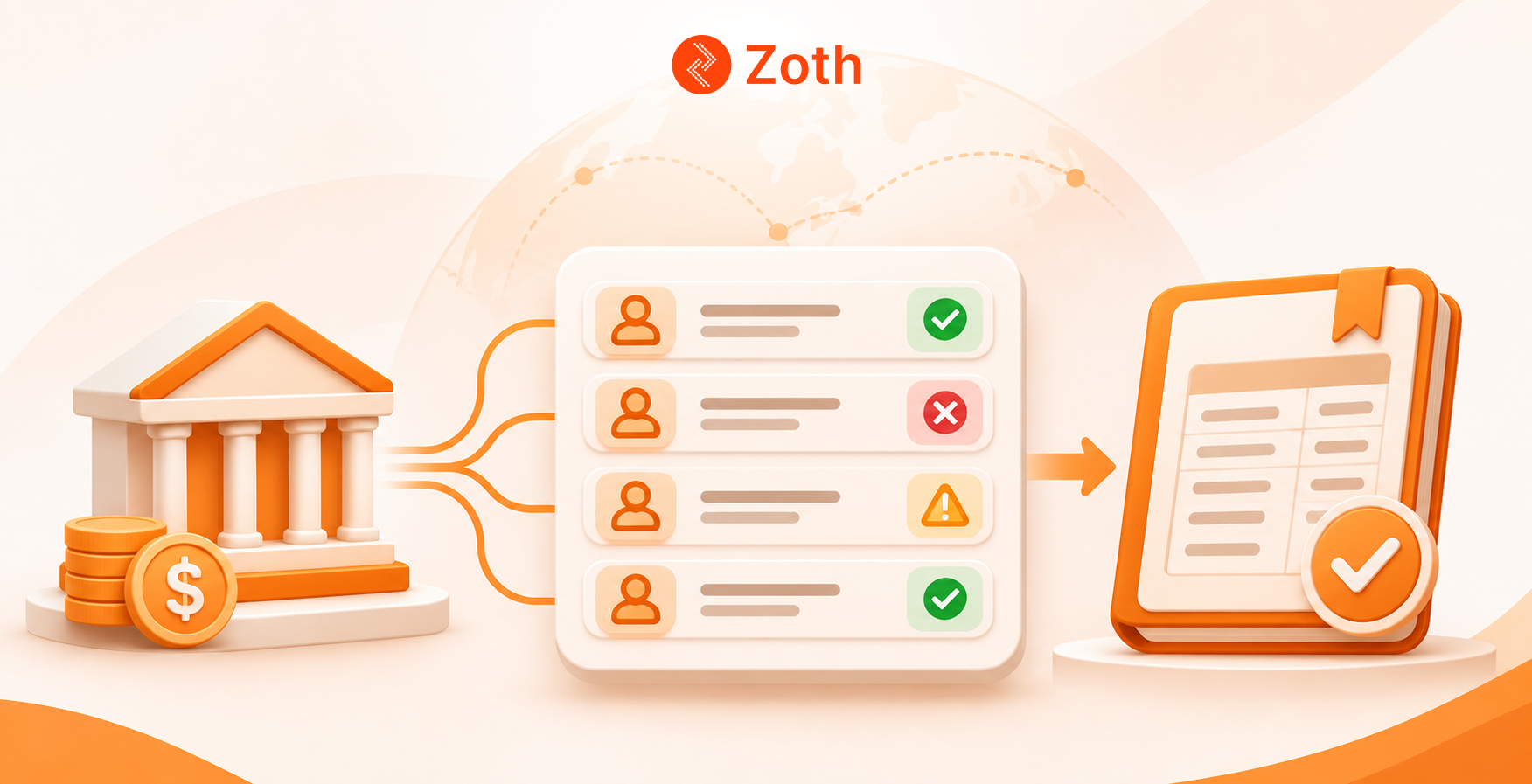
Zoth Payments Limited, registered with FINTRAC as a money services business, operates zPayments to handle stablecoin vendor payments for businesses paying into emerging markets. Payouts are funded in USDC, converted at a disclosed rate and delivered in local currency through licensed partners in each supported corridor. Each payout shows the rate and the landed amount before approval and sits in one ledger with its status, so a treasury team can pay vendors in local currency from USDC inside a single approval flow.
For the capital a standing balance ties up, see nostro prefunding.
Holding USDC and paying vendors in emerging markets? Audit your cross-border payout fees with an international payment specialist at zPayments today.
Frequently asked questions
Can a business pay vendors in local currency from USDC without the vendor holding crypto?
Yes. The provider converts the USDC and credits local fiat, so the vendor receives an ordinary domestic payment with an invoice reference.
Does the business need a local bank account in each country?
No. To pay vendors in local currency from USDC, the business holds one USDC balance; conversion happens at execution and a licensed local partner delivers through the domestic rail.
What do stablecoin vendor payments cost?
A conversion rate measured against the mid-market rate plus a network fee, both quoted before approval. Local liquidity in each market sets the rate.
How does a head of treasury measure the return?
On four lines per corridor: local balances retired, conversion captured at execution, payables cleared on time and close effort, less provider fees.
How do I pay vendors in local currency from my company’s USDC treasury?
Fund the payout from the USDC balance and get a quote showing the rate and the amount the vendor receives. A regulated payout partner then credits the vendor’s bank account or mobile wallet in local currency.